
Key Takeaways - How To Build A Cybersecurity Program
- Building cybersecurity documentation from scratch typically costs $200K to $500K plus in labor when accounting for senior practitioner time.
- ComplianceForge products provide the same documentation for a fraction of the cost. Typically saving 80 to 90% compared to internal development.
- A complete cybersecurity program requires policies, standards, procedures, risk assessments, incident response plans and more.
- Hiring a consultant to write custom documentation costs $150 to $400 per hour. And still takes months to complete.
- ComplianceForge products are delivered same-day in editable formats, giving you a massive head start.
Cybersecurity Program Development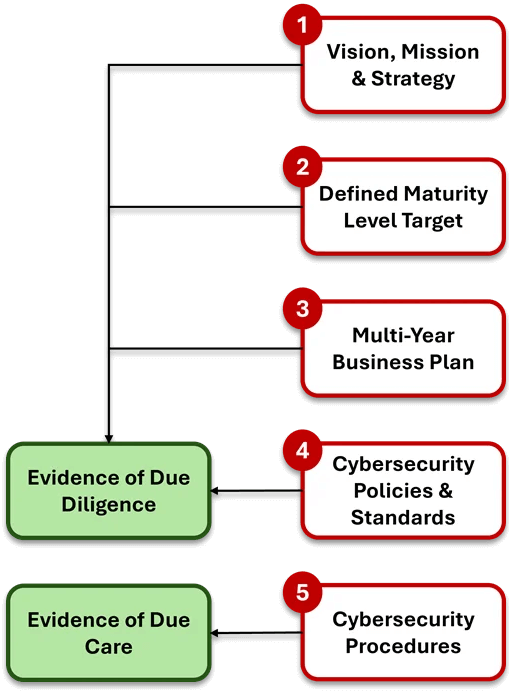
It All Starts With The Business
Vision, Mission & Strategy
High-level business guidance is a necessity to create a viable IT security program. This executive-level direction establishes the big picture goals that IT security capabilities will need to enable.
Defined Maturity Level Target
Many companies define a maturity state target for their IT security programs. Maturity levels help quantify risk – lesser mature programs will inherently accept greater risk than more mature programs. These maturity levels are commonly defined by ISO 15504-2, COBIT, or CMMI for Services frameworks.
Multi-Year Business Plan
When you tie in a targeted maturity level with an understanding the company’s vision, mission and strategy, you can clearly develop a business plan that makes IT security a strategic asset to enable growth and minimize risk to the company.
Cybersecurity Policies & Standards
From the perspective of a company’s IT security program, what brings it all together is the policies and standards. This documentation provides the management, operational and technical direction for IT security technologies and activities.
Cybersecurity Procedures
Procedures are where “the rubber meets the road” for IT security. Procedures enact the requirements called out in the IT security policies and standards to create a formal method to do something.
Working together, this program documentation helps create evidence of due care and due diligence - critical to proving your company took reasonable precautions to prevent a cybersecurity incident!
Due Diligence Considerations
Due Diligence Considerations
- Defined maturity targets influence business planning.
- Business plans document milestones to meet maturity targets.
- Business plans provide scoping for the IT security program.
- Business plans establish evidence of due care.
- Procedures establish evidence of due care.
Due Care Considerations
Due Care Considerations
- Procedures direct the workflow for staff to follow.
- Managing exceptions to standards documents the management of risk.
- Evidence of procedures being followed establishes evidence of due diligence.
Common Questions
Frequently-Asked Questions
Here are answers to common questions about building a cybersecurity program: