
Strategy & Implementation Plan (C-SCRM SIP)
- Based on NIST 800-161 Rev 1 - the "gold standard " for C-SCRM practices.
- Designed to provide a NIST 800-161-based C-SCRM Strategy & Implementation Plan (SIP).
- Efficient and professionally-written format that enables you to hit the ground running with C-SCRM.
- Immense time & cost savings - enables subject matter experts to fill in the details that only they know.
Don't Write It From Scratch.
Software and hardware supply chain attacks are now a top enterprise risk, and a growing list of regulations and contracts requires a documented C-SCRM program. If asked, could you show a strategy and implementation plan for managing supply chain risk, or is it scattered across procurement emails and vendor contracts? Building a NIST 800-161-aligned program from a blank page is a major undertaking. The C-SCRM Strategy & Implementation Plan (C-SCRM SIP) gives you a running start: an editable Microsoft Word, Excel, and PowerPoint documentation set that operationalizes a Cybersecurity Supply Chain Risk Management program aligned to NIST SP 800-161 Rev 1. It gets you roughly 80 to 90 percent of the way there, then you tailor the strategy and controls to your supply chain.
The C-SCRM Strategy & Implementation Plan (C-SCRM SIP) is an editable Microsoft Word, Excel, and PowerPoint documentation set that operationalizes a Cybersecurity Supply Chain Risk Management Program aligned with NIST SP 800-161 Rev 1, the gold standard for authoritative C-SCRM guidance.
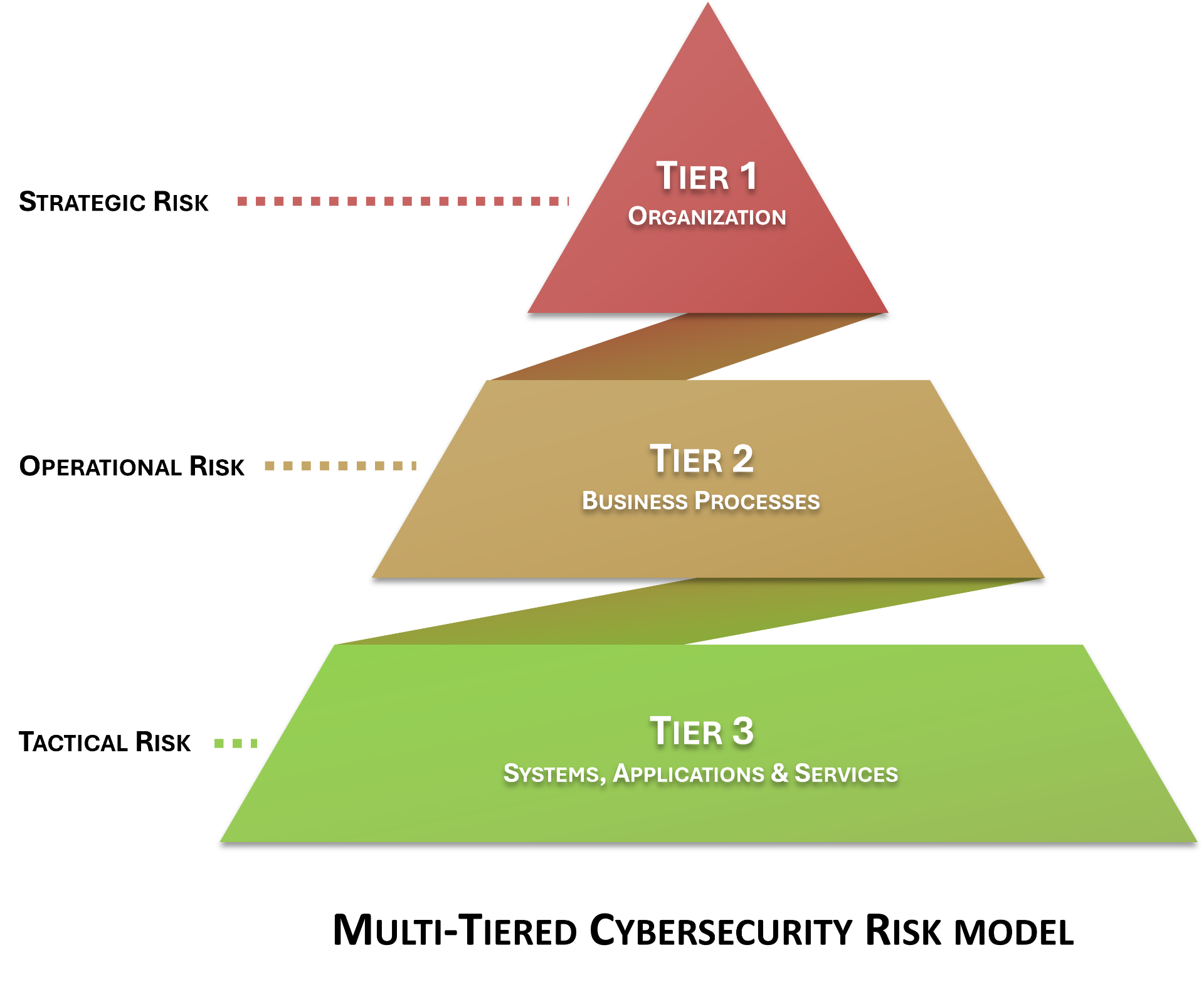
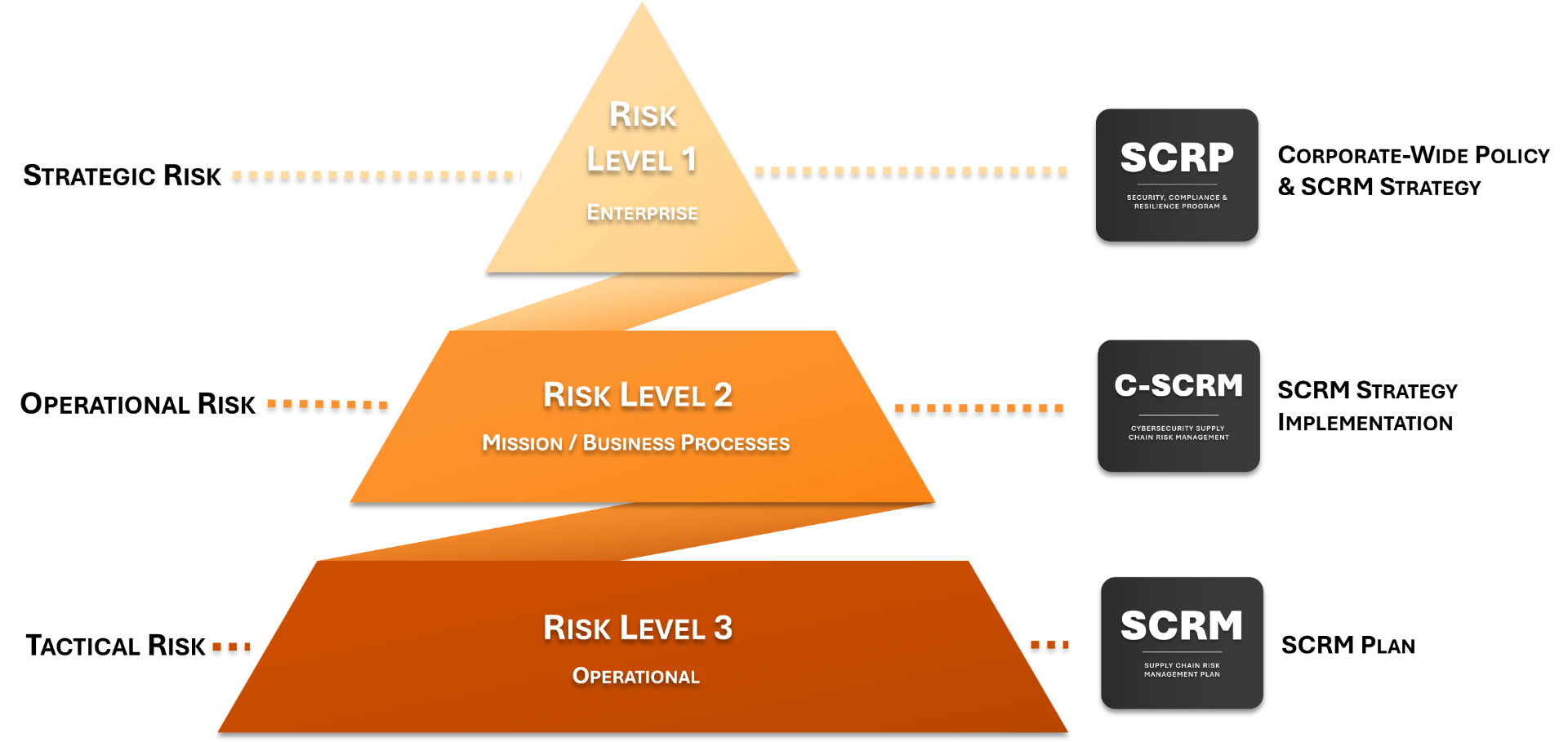
As some context, risk management actions primarily exist at different business levels (e.g., strategic risk, operational risk and tactical risk). Each has its own focus and practices.
- At the enterprise level (strategic), there you are going to find corporate-wide policies and a risk management strategy, including defining:
- Risk tolerance; and
- Risk appetite.
- At the mission / business process level (operational), you are going to find risk management practices and strategy implementation, including standardized processes for:
- Risk identification;
- Risk assessment;
- Risk tracking (e.g., risk register); and
- Risk remediation.
- At the team / project / individual contributor level (tactical), you are going to find actionable practices on how to reduce and remediate risk. Evidence of how these risks are managed are often in the form of documented:
- SCRM Plans; and/or
- System Security Plans (SSPs).
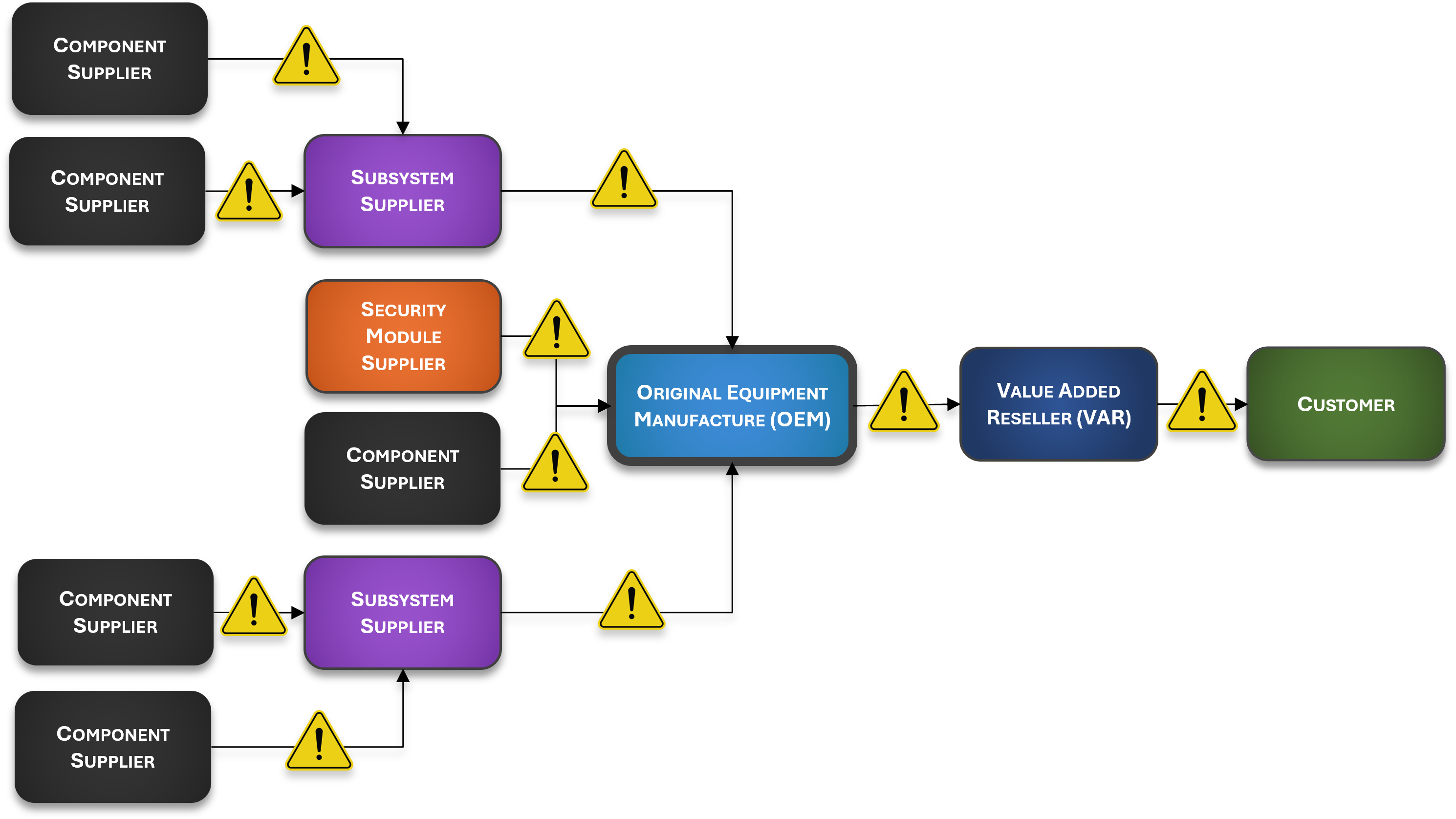
The reality is organizations depend on a global supply chain to provide a variety of products and services that enable the achievement of its strategic and operational objectives. Given the global scope of identifying cybersecurity and data protection risks, threats and vulnerabilities throughout the supply chain are complicated due to the information asymmetry that exists between acquiring enterprises and their suppliers and service providers:
- Acquirers often lack visibility and understanding of how acquired technology is developed, integrated and deployed and how the services that they acquire are delivered.
- Acquirers with inadequate or absent C-SCRM processes, procedures and practices may experience increased exposure cybersecurity risks throughout the supply chain.
Product Walkthrough Video
What Does This Product Walkthrough Cover?
To help explain the product in more detail, below is a product video that will give a walkthrough of our product. It will give a brief overview of what it is, what is included within the download, how the cost compares with writing it internally versus hiring a consultant, and how much customization remains when it arrives.
The walkthrough covers the same sections you will find further down this page, so you can either read through the detail here or watch it summarized first. Chapter timestamps are included to the right of the video, so if you only want to watch one part, such as what is included within the download or what the cost comparison goes over, you can jump straight to it.
- 0:00 Introduction
- 0:28 Product Overview
- 3:07 What Is The C-SCRM SIP?
- 5:56 No Software To Install
- 7:04 What Problems Does The C-SCRM SIP Solve?
- 8:28 How Does The C-SCRM SIP Solve These Problems?
- 9:25 What Is Included?
- 10:46 Cost Savings Estimate
- 11:45 Product Examples
- 11:58 How Much Customization Remains?
- 12:49 Professional Services
- 13:30 Why Strategic C-SCRM
- 14:26 Country-Based Risk
- 15:12 SBOM & EO 14028
- 16:02 Risk Management Comparisons
- 16:36 Reducing Risk
- 17:09 Questions? Contact Us.
What Is The C-SCRM SIP?
The C-SCRM SIP is an editable Microsoft Word document that is intended to operationalize a C-SCRM Program that can enforce security across your supply chain (e.g., service providers, vendors, contractors, etc.).
- The C-SCRM SIP is based on NIST SP 800-161 R1 to develop a C-SCRM Program, that can apply across the entire organization.
- The text for specific flow-down requirements identified in the C-SCRM SIP can be used in contract a addendum.
- Includes a "SCRM Plan" that is based on NIST SP 800-161 R1 and DI-MGMT-82256A formats that specify content for a SCRM Plan (e.g., requirement in NIST SP 800-171 R3, requirement 3.17.1).
- This product addresses the “how?” questions for how your company manages risk with third parties.
- Managing third-party risk through third-party risk management (TPRM) is now a common requirement in statutory, regulatory and contractual obligations.
- The C-SCRM SIP helps provide evidence of due care in how your company informs third parties about their cybersecurity obligations.
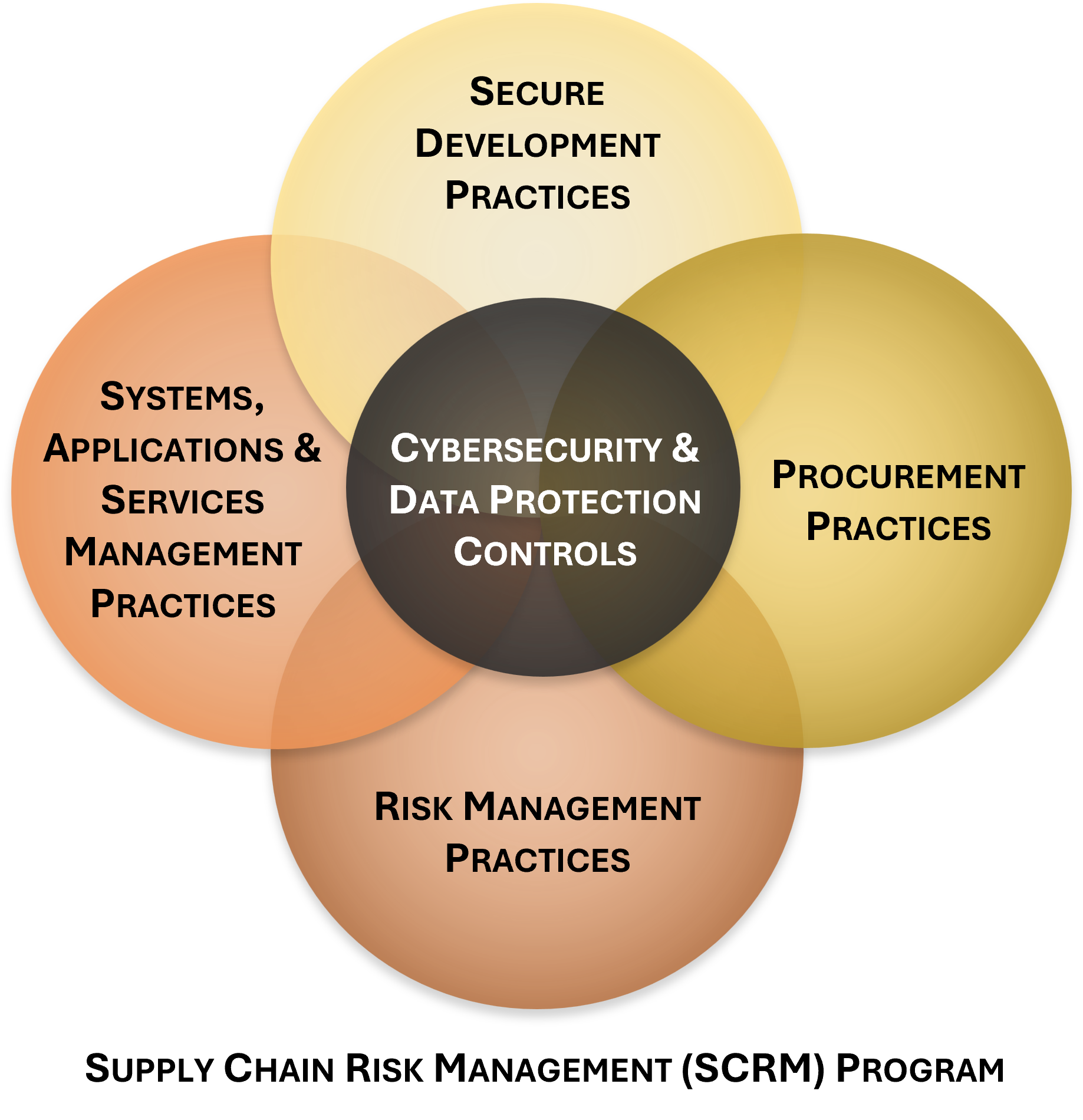
The C-SCRM SIP product is designed to implement a C-SCRM Program, as well as deliver an efficient and cost-effective method to develop a C-SCRM strategy and implement actionable steps to operationalize the C-SCRM strategy. Suppliers, Integrators and Service Providers (SISP) are in scope for C-SCRM operations, where the term SISP includes Original Equipment Manufacturers (OEMs), vendors, contractors, consultants and other entities that make up the supply chain. This scope of operations for the C-SCRM SIP includes all entities that:
- Transmit, process and/or store an organization's, or its clients’, data across the SISP's systems, applications and/or services;
- Manufacture products or product components used in an organization's operations and/or products; and/or
- Provide services for an organization's operations and/or service offerings.
Product highlights of the C-SCRM SIP include:
- Country-based risk guidance to determine minimum management decision levels for conducting operations in or contracting with suppliers from countries that pose a legitimate C-SCRM threat.
- The prioritized supply chain implementation plan contains mappings for NIST SP 800-161 R1 controls to each C-SCRM implementation phase.
- Professionally-written, editable documentation template that leverages industry-recognized "best practices" for C-SCRM.
- Cost-effective solution to quickly generate documentation for a C-SCRM strategy and implementation plan.
- Example flow-down contract requirements for suppliers, vendors, subcontractors, etc. (DFARS/CMMC, ISO 27001, NIST CSF, NIST 800-53, FAR, PCI DSS, and EU GDPR/CCPA).
The first step to address that risk is to let your vendors know what is required from them - this addresses due care. The next step is to hold your vendors accountable to meet your requirements - this addresses due diligence. You owe it to your clients to ensure your risks are addressed across your organization and that is where our Supply Chain Risk Management (C-SCRM SIP) helps.
With requirements like the CMMC, EAR/ITAR, PCI DSS, etc., there is a need for a simple way for a company to inform its service providers of expectations when it comes to managing information security risks. It is a common-sense requirement that businesses should have in place, so that is why there is a push to reduce risk with service providers.
In light of the recent breaches at major corporations, it is likely that a crackdown will follow for businesses to follow better cybersecurity. One of the most important points to remember when it comes to compliance is that if you cannot prove you are compliant (e.g., documented policies & standards) then your business will be unlikely to count on business insurance to cover the expense of a breach.
The C-SCRM SIP can serve as a foundational element in your organization's cybersecurity program. It can stand alone or be paired with other specialized products we offer.
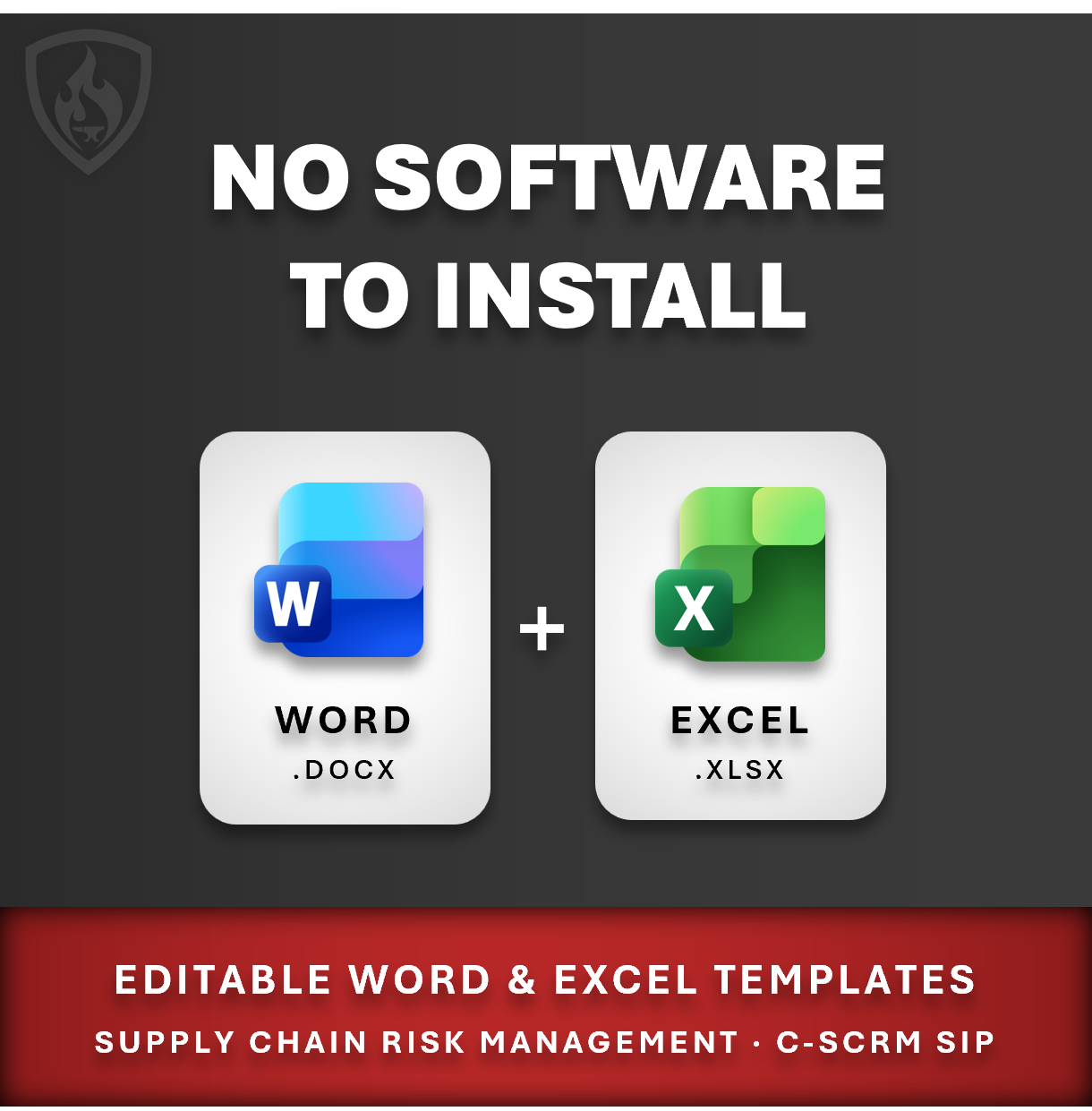
No Software To Install
This product is a one-time purchase of editable Microsoft Office-based documentation templates. There is no software to install, no agent to deploy, no account to provision, and no cloud environment to configure. If the organization can open and edit Microsoft Word, Excel, and PowerPoint files, the C-SCRM SIP is ready to use.
Word, Excel & PowerPoint
Delivered as fully editable .docx, .xlsx, and .pptx files. Compatible with Microsoft 365, OpenOffice, LibreOffice, and Google Workspace. PowerPoint is used for executive briefings of the C-SCRM strategy.
Email Delivery
Documentation is delivered via email download link within 1-2 business days of purchase. There is no installer, no license server, and no activation step.
One-Time Purchase
A single-entity license is included with purchase. There is no recurring subscription requirement, although an optional update subscription is available to stay current as C-SCRM frameworks evolve.

This deployment model is intentional. C-SCRM documentation benefits from being in the organization's own hands, inside its own document management systems, rather than locked inside a vendor's SaaS tool. Once delivered, this product belongs to the buyer.
What Problems Does the C-SCRM SIP Solve?
Procuring Information and Communications Technology (ICT) and Operational Technology (OT) products from suppliers establishes a direct relationship between those suppliers and the acquirers. This relationship is also usually guided by a legally-binding, contractual agreement between the acquirer and the supplier. However, commercial ICT/OT developed by suppliers are typically designed for general purposes for a global market and are not tailored to an individual customer’s specific operational or threat environments. Commercial Off The Shelf (COTS) ICT/OT have some shared vulnerabilities to bespoke products, applications and services, but the opaqueness of the components and modules that make up COTS creates its own issues.
Lack Of In-House Security Experience
Writing security documentation is a skill that many good cybersecurity professionals simple are not proficient at and avoid the task at all cost. Tasking your security analysts and engineers to write comprehensive documentation means you are actively taking them away from protecting and defending your network, which is not a wise use of their time. The C-SCRM SIP is an efficient method to obtain documentation to build a C-SCRM Program!
Compliance Requirements
It is becoming increasingly common for organizations, regardless of industry, to be required to govern its supply chain for cybersecurity and privacy threats and risks.
Audit Failures
Many organizations run into trouble in audits when asked HOW third-party or supply chain risk is managed, since they cannot provide documentation beyond policies and standards. The C-SCRM SIP addresses the HOW for you!
Vendor Requirements
It is very common for clients and partners to request evidence of third-party cybersecurity governance. The C-SCRM SIP provides this evidence!
How Does the C-SCRM SIP Solve These Problems?
The C-SCRM SIP addresses supply chain documentation gaps with specific, measurable outcomes. It is designed for organizations needing strategic C-SCRM documentation aligned with NIST SP 800-161 Rev 1 and operational implementation guidance.
Clear Documentation
The C-SCRM SIP provides the documentation to prove that your vendor compliance program exists.
Time Savings
The C-SCRM SIP can provide your organization with a semi-customized solution that requires minimal resources to fine tune for your organization's specific needs.
Alignment With Leading Practices
The C-SCRM SIP is aligned with NIST SP 800-161, which is the "gold standard" for supply chain risk management practices.
Prioritized Implementation Plan
The C-SCRM SIP contains 24 prioritized implementation phases mapping NIST SP 800-161 Rev 1 controls. This prevents rework during control implementation by sequencing the work into a defensible order of operations.
What Is Included?
The C-SCRM SIP is delivered as editable Microsoft Word, Excel, and PowerPoint documentation. Purchase includes a single-entity license and the first year of product updates.
C-SCRM Strategy & Implementation Plan
The core editable Word document operationalizing a C-SCRM Program aligned with NIST SP 800-161 Rev 1. Includes the strategic framework, scope definitions covering Suppliers, Integrators, and Service Providers (SISP), and the operational structure for C-SCRM governance.
24 Prioritized Implementation Phases
The prioritized supply chain implementation plan contains mappings for NIST SP 800-161 Rev 1 controls to each of 24 C-SCRM implementation phases. This prevents rework during control implementation by sequencing controls in a defensible order of operations.
Country-Based Risk Guidance
Country-based threat management guidance refined by the Special 301 Priority Watch List, Corruption Perceptions Index, Notorious Markets List, designated State Sponsors of Terrorism, EAR/ITAR restrictions, and hostile data localization laws. Used to set minimum management decision levels for supplier engagements.
SCRM Plan Templates & SBOM Guidance
Includes both NIST SP 800-161 Rev 1 and DI-MGMT-82256A SCRM Plan templates plus SBOM guidance addressing Executive Order 14028. Flow-down contract requirements span DFARS/CMMC, ISO 27001, NIST CSF, NIST 800-53, FAR, PCI DSS, and EU GDPR/CCPA.
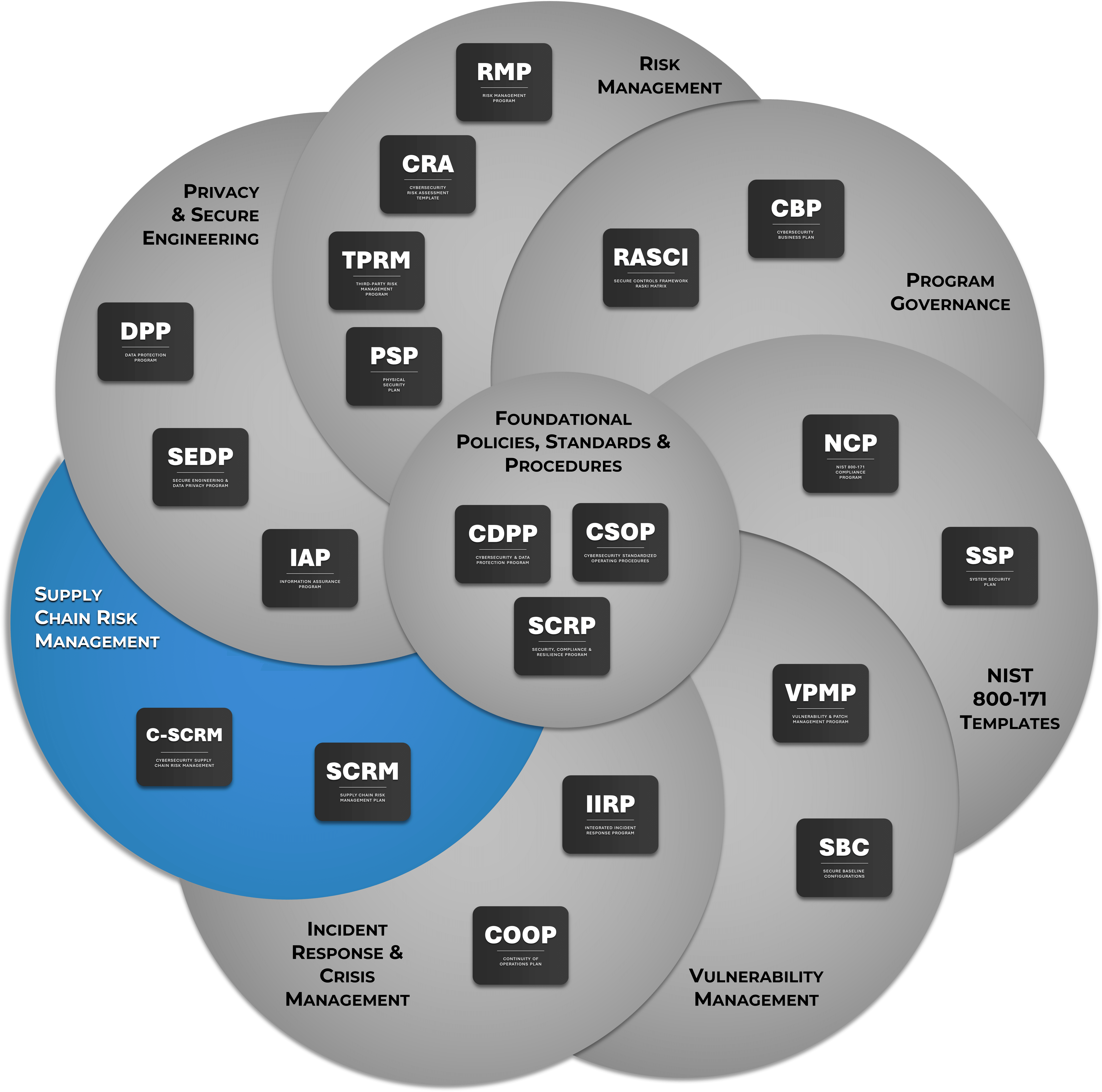
Pairs With The TPRM Program
The C-SCRM SIP is the strategic layer for supply chain risk. The companion Third-Party Risk Management (TPRM) Program provides the operational documentation, the policies, procedures, and assessment templates that operationalize the strategy at the day-to-day vendor management level. Most organizations purchase both for complete coverage.
Cost Savings Estimate
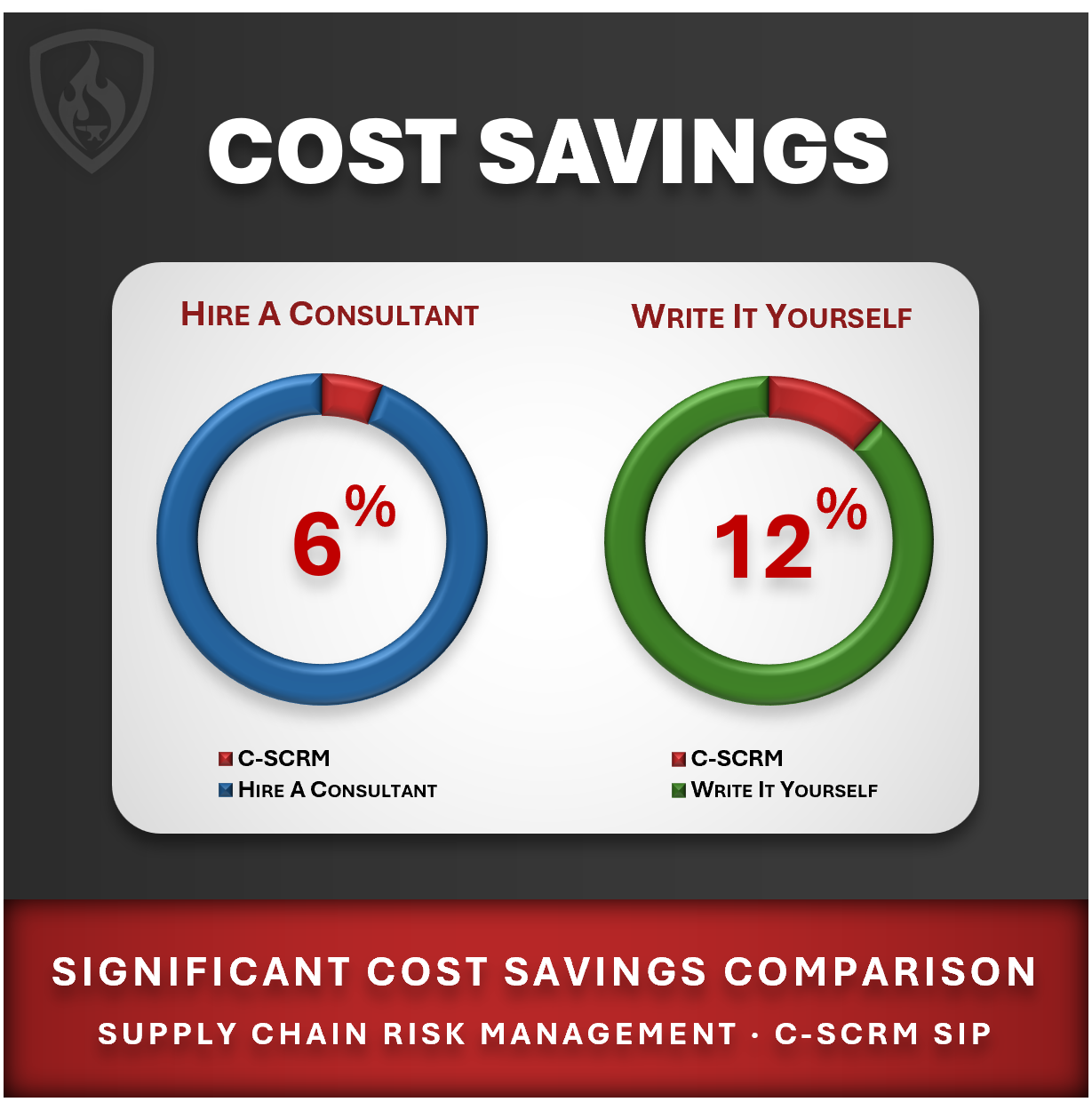
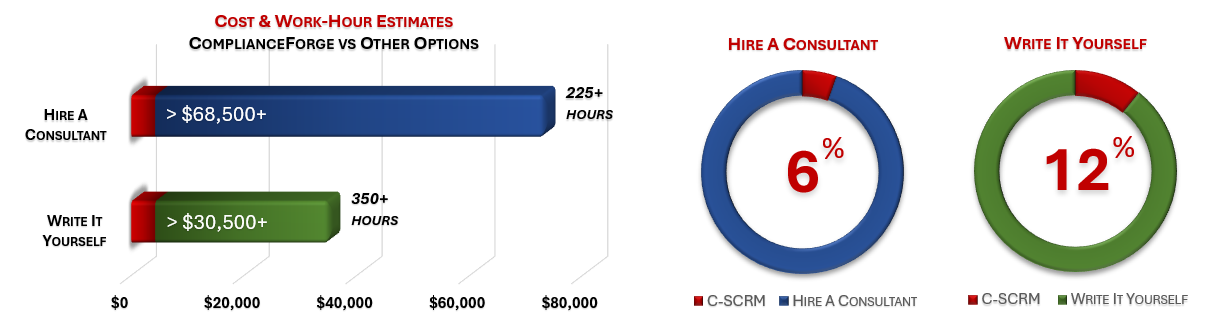
When you look at the costs associated with either (1) hiring an external consultant to write cybersecurity documentation for you or (2) tasking your internal staff to write it, the cost comparisons paint a clear picture that buying from ComplianceForge is the logical option. Compared to hiring a consultant, you can save months of wait time and tens of thousands of dollars. Whereas, compared to writing your own documentation, you can potentially save hundreds of work hours and the associated cost of lost productivity. Purchasing the C-SCRM SIP from ComplianceForge offers these fundamental advantages when compared to the other options for obtaining quality cybersecurity documentation:
Internal Staff Cost
For your internal staff to generate comparable documentation, it would take them an estimated 350 internal staff work hours, which equates to a cost of approximately $30,500 in staff-related expenses. This is about 4 to 8 months of development time where your staff would be diverted from other work.
The C-SCRM SIP is approximately 12% of the cost for your internal staff to generate equivalent documentation.
External Consultant Cost
If you hire a consultant to generate this documentation, it would take them an estimated 225 consultant work hours, which equates to a cost of approximately $68,500. This is about 3 to 6 months of development time for a contractor to provide you with the deliverable.
The C-SCRM SIP is approximately 6% of the cost for an external consultant to generate equivalent documentation.
Product Examples
The Cybersecurity Supply Chain Risk Management Strategy & Implementation Plan (C-SCRM SIP) is based significantly on "best practices" from NIST SP 800-161. It contains necessary components to implement a C-SCRM Program and operationalize a C-SCRM strategy with the provided implementation plan guidance. You get fully-editable Microsoft Word and Excel documents that you can customize for your specific needs.
Below are PDF examples showing the C-SCRM Strategy and Implementation Plan and the 24-phase prioritized implementation plan mapping, so you can see the quality and structure of the documentation before purchase.
Below is a PDF example containing a sample of what you would receive upon purchasing the C-SCRM.

Below is a PDF example containing a summary of all controls applicable to NIST 800-161.

How Much Customization Remains?
Given the difficult nature of writing templated cybersecurity documentation, ComplianceForge aims for approximately an 80% solution because it is impossible to write a 100% cookie-cutter document that can be equally applied across every organization. ComplianceForge did the heavy lifting, and the remaining work is fine-tuning the C-SCRM SIP with the specific information that only your organization knows.
In practice, customization is filling in the blanks and following the guidance provided to identify the who, what, when, where, why, and how for your specific environment. Typical customization tasks include adding your company name and logo, tailoring parameters such as supplier tiering thresholds and country-risk decision levels, naming specific owner roles, selecting applicable flow-down contract language from the provided framework examples, and removing sections that do not apply to your organization.

Professional Services
ComplianceForge offers optional professional services to customize purchased documentation. Professional services are not required to customize ComplianceForge documentation. However, some clients want our subject matter expertise to help customize their documentation to meet their specific business needs. We offer the following professional service bundles:
5-Hour Bundle
This includes five (5) hours of professional services, which may be beneficial for companies that need some guidance on getting started with how to tailor their documentation.
10-Hour Bundle
This includes ten (10) hours of professional services, which may be beneficial for companies that need additional guidance on tailoring their documentation to meet their compliance requirements.
20-Hour Bundle
This includes twenty (20) hours of professional services, which may be beneficial for companies that need robust services, beyond just 10 hours, to assist in tailoring their documentation to meet their compliance requirements.
Purchased professional service hours expire 120 days (4 months) from the time of purchase if unused. Hours are intended to supplement, not replace, your own customization work, since only your organization knows the exact details to tailor your documentation. For questions regarding scoping a professional services engagement or configuring a custom package, contact ComplianceForge directly through the Contact Us page.
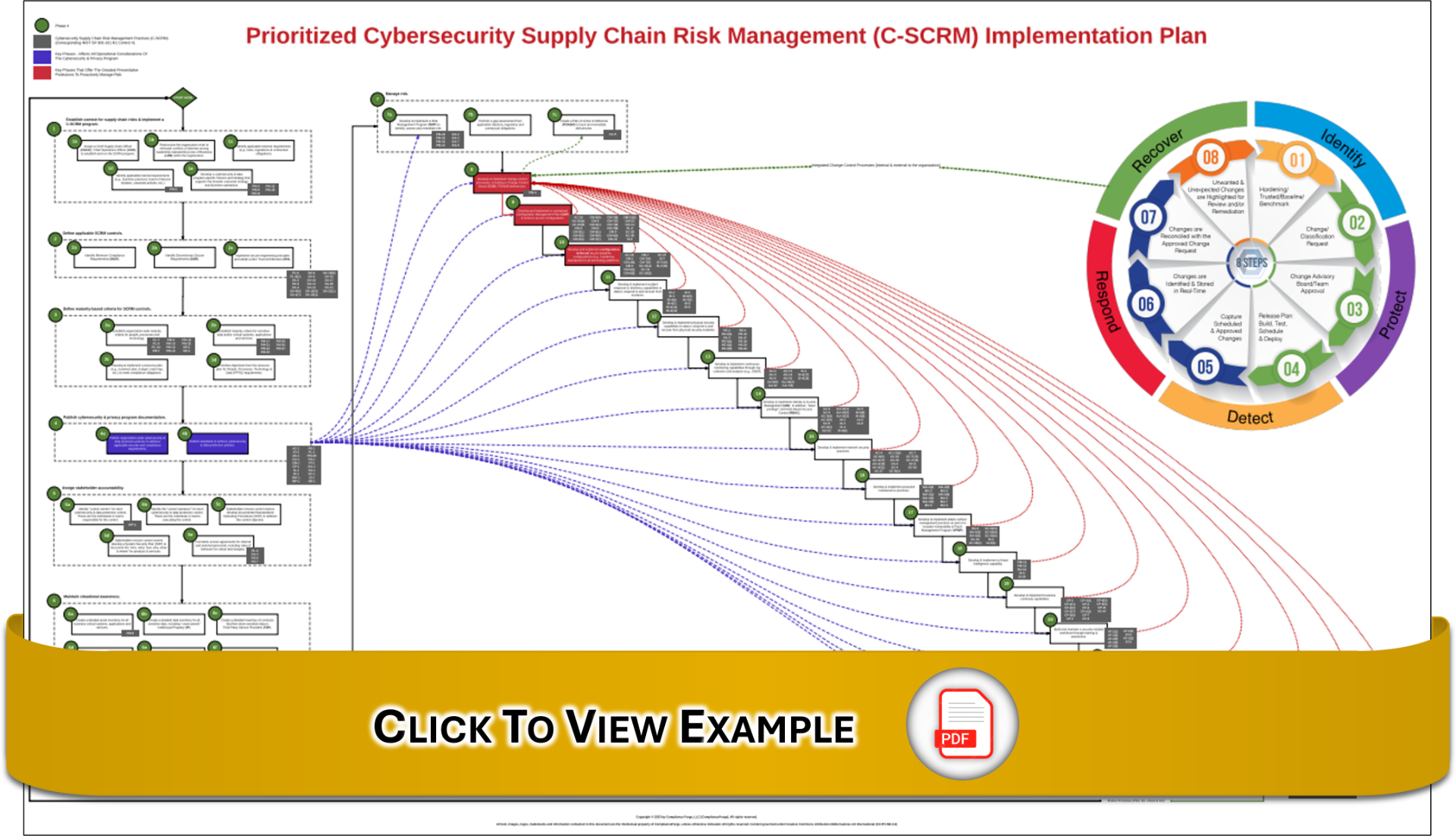
Prioritized C-SCRM Implementation Plan (NIST SP 800-161 R1 Mapping)
A SCRM Plan is a tactical deliverable: it documents what the organization will do for a single supplier ecosystem. The C-SCRM SIP is the strategic layer that operationalizes the entire C-SCRM Program across enterprise risk, operational risk, and tactical risk. Risk management actions exist at different business levels, and the C-SCRM SIP addresses all three: enterprise-level policies and risk tolerance, operational-level risk identification and assessment processes, and tactical-level implementation through SCRM Plans and System Security Plans.
The C-SCRM SIP contains a prioritized implementation plan that takes the controls identified in NIST SP 800-161 R1 and assigns the controls to one of twenty-four prioritized phases. This is designed to help prioritize controls that can prevent re-work during the control implementation process. This is one of the many helpful components that comes with the C-SCRM SIP product.
To view the example, click on the image, and it will open a new tab containing the .pdf file for the Prioritized C-SCRM Implementation Plan.
Country-Based Risk Guidance
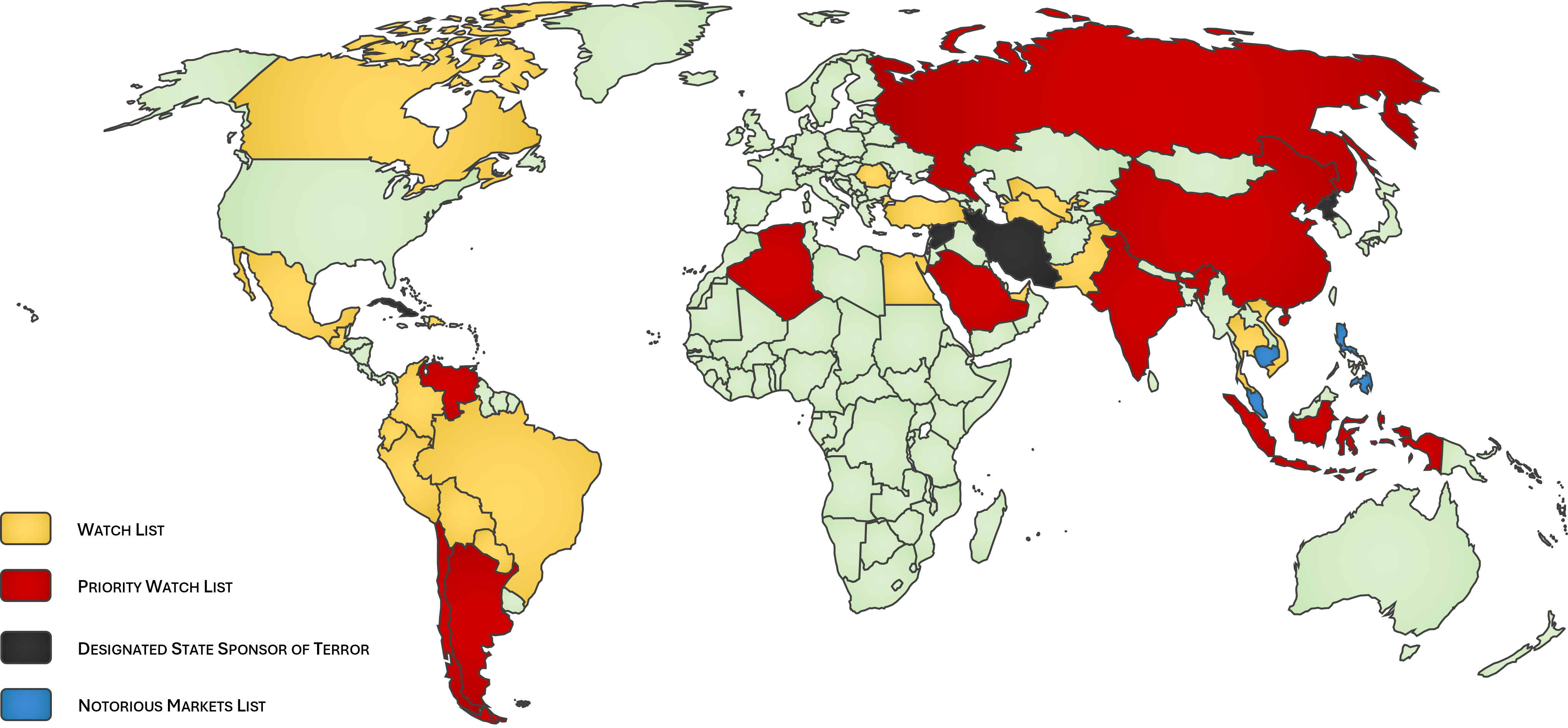
To properly manage supply chain-related threats, your organization must evaluate country-based threats posed by its supply chain. This review must cover the geographic concerns where your products, services and support originate from or transit through:
- Transmitting, processing and/or storing your company's or its clients’, data across the SISP's systems, applications and/or services;
- Manufacturing products or product components used in your company's operations and/or products; and/or
- Providing services for your company's operations and/or products.
Within the C-SCRM SIP, that criteria for geographic-specific threat management is refined by guidance from:
- Priority Watch List & Watch List;
- Corruption Perceptions Index;
- Notorious Markets List;
- Designated State Sponsors of Terrorism;
- EAR / ITAR restrictions; and
- Potentially hostile data localization laws.
SBOM Guidance For Executive Order 14028
Executive Order 14028, Executive Order on Improving the Nation’s Cybersecurity, is the driving factor for application security within C-SCRM, due to several, recent high-profile cybersecurity incidents. Specific to C-SCRM application security as it affects private industry, EO 14028 directs US Government agencies to develop plans to:
- Share information by removing barriers to share threat information;
- Modernize cybersecurity capabilities; and
- Enhance software supply chain security.
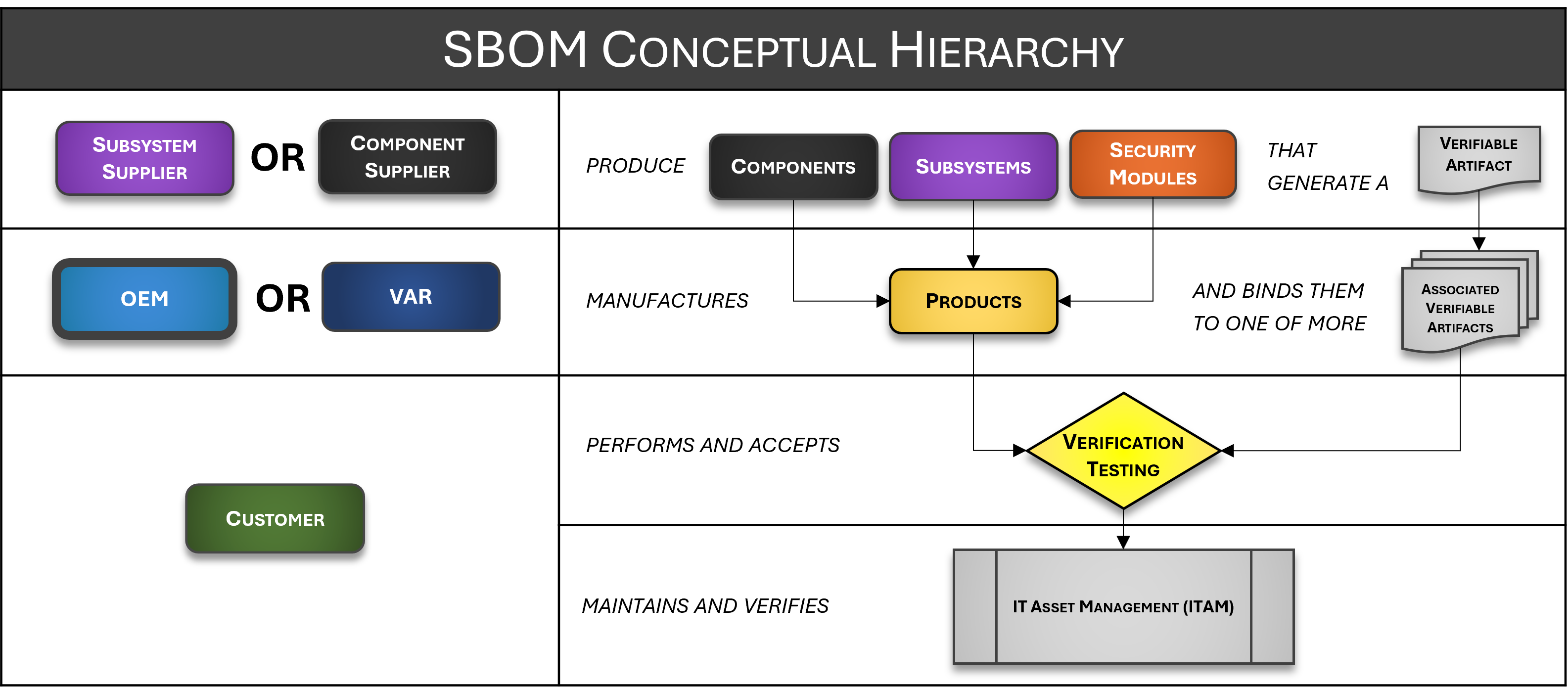
Due to the nature of how contract requirements flow down through the global supply chain, the ramifications of EO 14028 will be felt across all industries. The requirement that has the most potential to disrupt “business as usual” is expectations that software and services will be expected to have a Software Bill of Materials (SBOM).
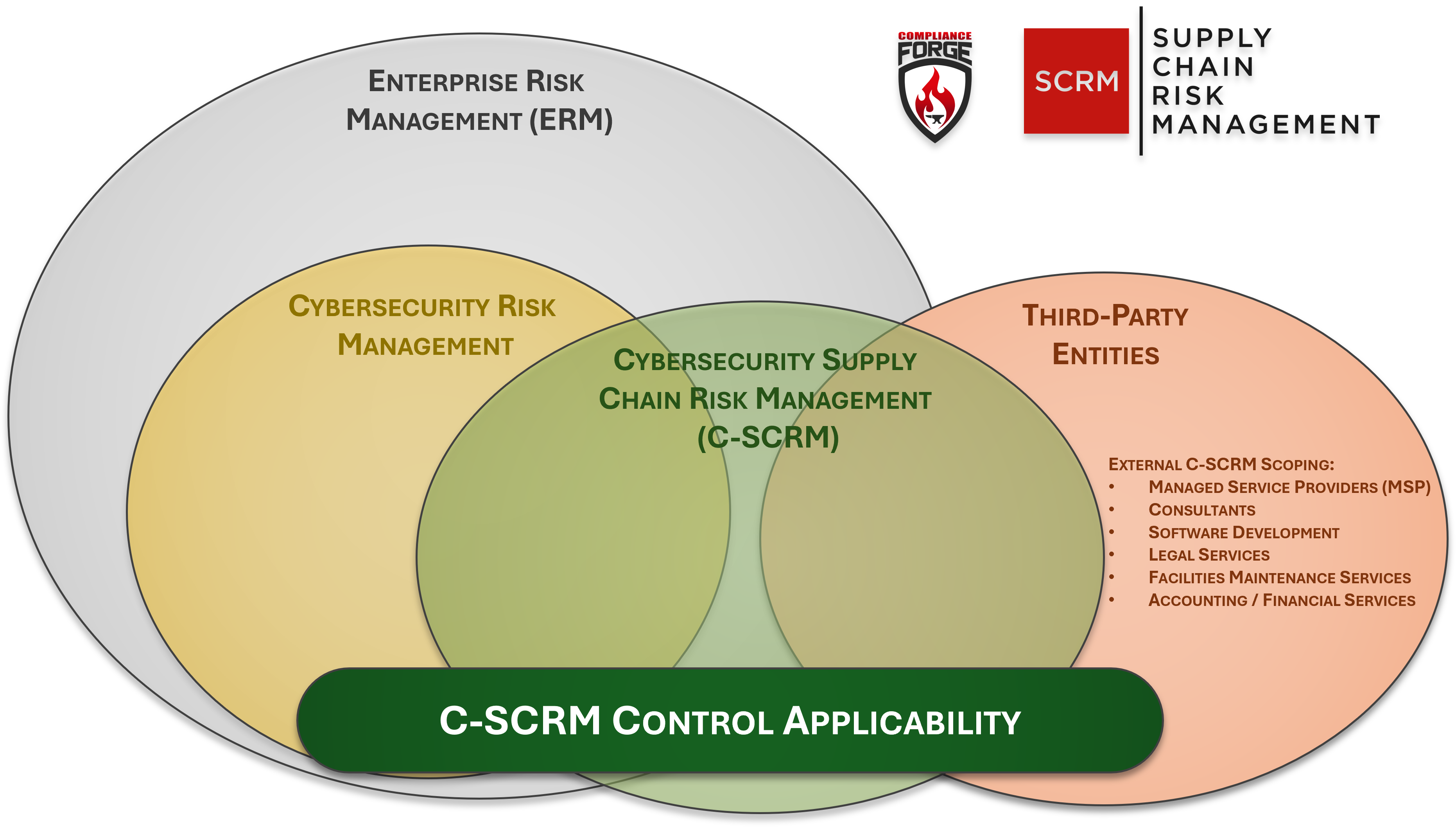
Enterprise Risk Management (ERM) vs Cybersecurity Risk vs SCRM vs C-SCRM
For the purposes of common compliance requirements for a SCRM Plan (e.g., GSA, NIST SP 800-171 Rev 3, etc.), the terms "Supply Chain Risk Management (SCRM)" and "Cybersecurity Supply Chain Risk Management (C-SCRM)" should be considered equivalent. However, if you really wanted to get into the weeds on terminology from a technicality perspective, C-SCRM is a subset of SCRM since SCRM has a broader view of supply chain risks than just cybersecurity where:
- C-SCRM is a subset of broader SCRM practices;
- SCRM is a subset of broader ERM practices.
When you look at current usage of the terminology, even authoritative sources such as the DoD, GSA, NIST and other bodies use the terminology interchangeably:
- NIST calls it a "SCRM" in NIST SP 800-171 Rev 3;
- NIST calls it a "C-SCRM" in NIST SP 800-161 Rev 1;
- GSA calls it a "SCRM" in OASIS+ requirements, even when focused on cybersecurity-related matters; and
- DoD calls it a "SCRM" in DI-MGMT-82256A.
In NIST's Glossary, it does not provide a definition for C-SCRM, but does provide a definition for SCRM as, "the implementation of processes, tools or techniques to minimize the adverse impact of attacks that allow the adversary to utilize implants or other vulnerabilities inserted prior to installation in order to infiltrate data, or manipulate information technology hardware, software, operating systems, peripherals (information technology products) or services at any point during the life cycle."
Reducing Risk Is Central To The Supply Chain Risk Management
Having a Supply Chain Risk Management (C-SCRM SIP) is focused on minimizing risk to your company, your partners and your customers. There is traditionally low level-risk (tactical) that is focused on weaknesses pertaining to routine systems and data. There is mid-level risk (operational) that is focused on weaknesses pertaining to business process. There is also high-level (strategic) risk that impacts at an organizational level. Having a secure vendor relationship can address risk at all three of these levels.